
Pricing
Multi-year contracts: how to price escalation without scaring clients
By the Bidas team · June 25, 2026 · 5 min read
Multi-year agreements are the best contracts in the service business: revenue you can plan around, no annual re-bid, and a client who stops shopping. But there's a trap in signing one — your costs won't hold still for three years, and a flat price means you're taking a small pay cut every year of the term. The answer is annual escalation. Presented well, it doesn't cost you the deal. Presented badly, it does.
Why escalation is legitimate
Wages rise. Fuel, insurance, supplies, and equipment rise. Your client knows this — their own costs rise too — and most professional buyers expect service contracts to adjust annually. Escalation in the low single digits per year is standard practice across janitorial, landscaping, maintenance, and managed services. You're not introducing a foreign concept; you're doing what serious vendors do. Framing it as unusual is what makes it feel unusual.
Anchor it to something external
“We'd like 4% more each year” is a negotiation. “Rates adjust annually, tied to the Consumer Price Index, capped at 4%” is a policy. Tying escalation to an outside index — or simply capping it — moves the conversation from your greed to the economy. Many buyers have internal rules that actually require CPI-linked language; you've just made their paperwork easier.
Show the table, not the percentage
A percentage is abstract, and abstract numbers get inflated in the reader's imagination. A table is concrete. “3% annual escalation” sounds open-ended; this does not:
- Year 1: $2,400 / month
- Year 2: $2,472 / month
- Year 3: $2,546 / month
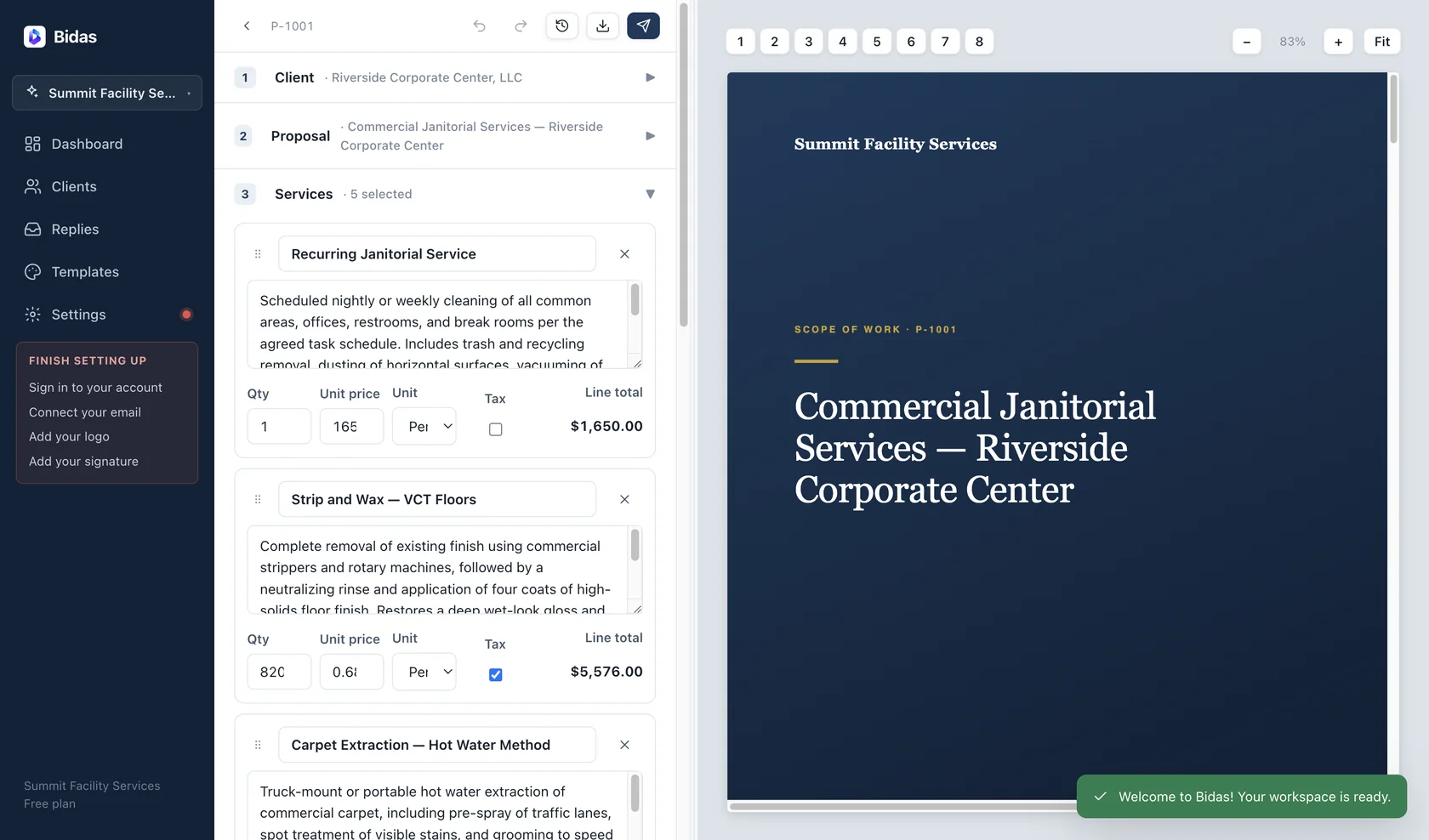
Every year visible, every number fixed. The client can budget around it, forward it to their boss without translation, and there's no renewal letter arriving like an ambush in month thirteen. Transparency is the whole trick — people accept what they can see, and they push back on what they have to extrapolate. In Bidas, multi-year mode generates this year-by-year table automatically from your escalation percentage, so the math is never a spreadsheet you maintain by hand.
Keep year one sharp
If the deal feels expensive, sharpen the first year rather than hiding the later ones. Discount the setup fee, hold year one at your standard rate, or absorb the first escalation for contracts signed this quarter. A client who signs at a fair year-one price with a published escalation table is a far better account than one who signs flat and resents the adjustment letter — or worse, one you can no longer afford to serve well in year three.
Say it in one sentence, early
Put a single plain sentence in your leadership letter: “Rates adjust 3% annually, with every year locked to the table on the investment page.” One sentence, no apology. When escalation appears in the letter, the table, and the terms, it reads as policy. When it appears only in the fine print of the terms, it reads as a trap.
What not to do
- Don't hide it. Discovered escalation destroys the trust that multi-year deals are built on.
- Don't leave it “to be determined.” TBD escalation is a fight scheduled for later.
- Don't go flat and plan to make it up in year three. You'll quietly cut service quality instead, and lose the account at renewal anyway.
Multi-year contracts reward both sides: the client gets budget certainty, you get a relationship instead of a transaction. Escalation is simply the mechanism that keeps the deal honest for all three years — so put it on the page where everyone can see it.
Put it to work on your next proposal
Bidas builds the structure, design, pricing math, and e-signature into one desktop app — free for your first three proposals each month.
Download free